Secure Your Free In-Person Estimate
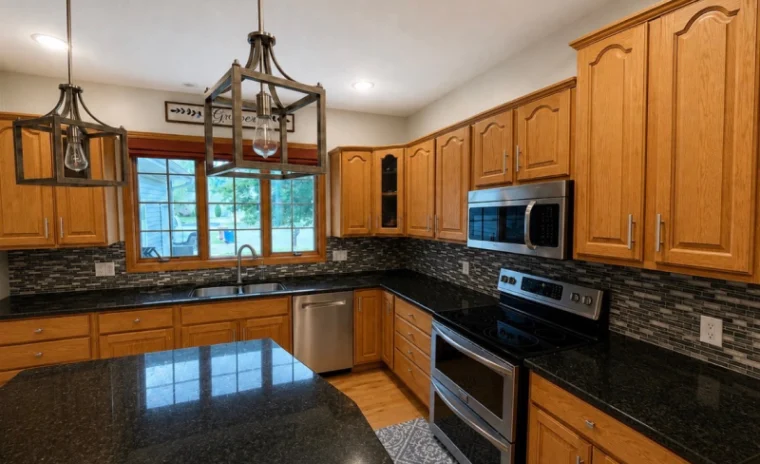
Authentic Craftsmanship Meets Lasting Value
Why Hardwood Matters for Wisconsin Kitchens
When homeowners in Green Bay consider kitchen cabinet refacing, the material choice determines everything from durability to daily satisfaction. Real hardwood cabinet doors deliver performance that alternatives simply cannot match, particularly in Wisconsin’s demanding climate. Veneer doors feature a thin layer of real wood over composite cores, often peeling or bubbling when exposed to the humidity swings between humid summer months and dry, heated winter air. Laminate doors, while initially attractive, show wear patterns within just a few years, with edges chipping and surfaces dulling under normal kitchen use. MDF alternatives absorb moisture during spring thaw periods, leading to swelling, warping, and eventual structural failure.
Solid hardwood responds differently to environmental stress. The wood naturally expands and contracts with seasonal humidity changes, but quality construction methods account for this movement, preventing the catastrophic failures seen in composite materials. Green Bay kitchens face temperature extremes that test every material, from July heat waves to January cold snaps that drop indoor humidity to desert levels. Real wood maintains structural integrity through these cycles, showing only minor dimensional changes that proper installation techniques easily accommodate.
Aesthetic appeal separates hardwood from every alternative. The depth of natural grain patterns, the way light plays across hand-finished surfaces, and the tactile quality of real wood create a kitchen presence that photographs and laminate prints cannot replicate. Over time, hardwood develops a patina that adds character, while synthetic materials simply look worn. For kitchen cabinet refacing projects where the existing cabinet boxes remain sound, investing in genuine hardwood doors transforms the space with material authenticity that homeowners notice every single day.
Amish Craftsmanship and Authentic Materials
Traditional woodworking methods produce cabinet doors that factory processes cannot duplicate. Amish craftsmen bring generations of knowledge to each piece, selecting boards for grain pattern consistency, moisture content, and structural soundness before any cutting begins. This attention to material selection eliminates the defects and inconsistencies common in mass-produced doors. Hand-finishing techniques allow for graduated stain application that highlights natural wood characteristics rather than obscuring them beneath uniform factory coatings. The result is cabinet doors with visual depth and tonal variation that make each kitchen genuinely unique.
Wood species selection directly impacts both appearance and performance. Oak remains popular for its pronounced grain and exceptional durability, standing up to decades of use while developing a rich patina. Cherry offers warmer tones that deepen over time, particularly appealing for traditional kitchen designs that emphasize comfort and permanence. Maple provides a finer, more uniform grain pattern preferred for contemporary spaces where clean lines and subtle texture work better than dramatic grain variation. Each species brings specific strengths, and skilled craftsmen understand how to work with the wood’s natural properties rather than against them.
Family-owned operations maintain quality standards that large manufacturers abandon in pursuit of volume and cost reduction. Our team sources real Amish hardwood specifically because the quality control and craftsmanship exceed anything available through mass-market suppliers. When a custom cabinet builder takes personal responsibility for each door that leaves the workshop, the attention to detail shows in joints that stay tight, finishes that wear gracefully, and dimensions that remain true through Wisconsin’s seasonal extremes. This level of care translates directly into kitchen cabinet refacing results that satisfy homeowners for decades rather than disappointing them within just a few years.
Long-Term Value and Return on Investment
Initial cost comparisons tempt many homeowners toward cheaper alternatives, but the calculation changes dramatically when performance over time enters the analysis. A cabinet refacing service using laminate or veneer doors might cost 30 to 40 percent less upfront, but those savings evaporate when doors need replacement within eight to ten years. Real hardwood cabinet doors installed today will likely outlast the homeowner’s residence in the property, potentially serving three or four decades with nothing more than occasional cleaning and perhaps one refinishing. The cost per year of ownership favors quality materials decisively once the timeline extends beyond the first few years.
Wisconsin’s climate accelerates the deterioration of inferior materials. Green Bay kitchens experience humidity spikes during summer months when lake-effect moisture combines with cooking activities, followed by winter months when heating systems strip moisture from indoor air. This cyclical stress tests adhesive bonds in veneer products and dimensional stability in composite cores. Homeowners who chose budget materials five or six years ago now face peeling edges, loose veneer, and visible warping, discovering that the initial savings merely delayed inevitable replacement costs. Hardwood doors weather these same conditions with minimal impact, maintaining appearance and function through decades of seasonal cycling.
Home value calculations increasingly favor authentic materials as buyers become more discerning about quality indicators. Real estate professionals note that kitchens with genuine hardwood cabinetry command attention during showings and support higher asking prices. The investment in quality cabinet renovation service pays returns both in daily satisfaction and eventual resale value, making the decision to specify real hardwood doors a financially sound choice regardless of how long the homeowner plans to remain in the property.
Customization and Design Flexibility
Real hardwood accepts stain and finish treatments that synthetic materials cannot replicate. A homeowner drawn to the warm amber tones of medium oak stain can achieve exactly that appearance, while another preferring darker espresso finishes on the same wood species gets equally authentic results. The wood grain remains visible beneath the stain, providing texture and visual interest that solid-color laminates lack entirely. Custom finishing extends to sheen levels as well, from matte surfaces that minimize reflections in bright kitchens to satin finishes that add subtle depth without high-gloss shine.
Design options multiply when working with skilled craftsmen who understand both traditional and contemporary cabinet construction. Raised panel doors bring classic formality to traditional spaces, while flat-panel designs suit modern aesthetics where clean lines matter more than decorative detail. Shaker-style doors bridge both approaches, offering enough visual interest for traditional settings while maintaining the simplicity contemporary design demands. Cabinet storage solutions integrate seamlessly when door styles remain consistent, allowing homeowners to add functional elements like pull-out spice racks or lazy Susan units without visual disruption.
Matching existing kitchen elements becomes straightforward when working with natural materials. A cabinet modification service using real hardwood can match wood species and finish to existing trim, flooring, or furniture, creating visual continuity that ties the entire space together. This flexibility proves particularly valuable in open-concept homes where kitchen cabinetry remains visible from living and dining areas. The ability to specify exact wood species, grain selection, and finish treatment ensures that bathroom cabinet refacing projects maintain consistency with kitchen work completed earlier, building a cohesive design language throughout the home.
Making the Right Choice for Your Kitchen
Determining whether hardwood cabinet refacing fits your situation starts with honest assessment of your existing cabinet boxes. If the structural components remain solid, with sturdy frames and functioning hinges, refacing delivers the appearance of new cabinetry at a fraction of replacement cost. Homeowners should examine cabinet interiors for water damage, particularly under sinks and near dishwashers, as moisture compromise requires more extensive repair before refacing makes sense. Cabinet boxes showing only cosmetic wear, outdated door styles, or finish deterioration prove ideal candidates for refacing with quality hardwood doors.
Questions to pose during consultation with a cabinet refacing contractor reveal both the contractor’s knowledge and the project’s scope. Ask about wood species options and why specific choices suit your kitchen’s conditions and aesthetic goals. Inquire about finishing processes and whether stain samples can be applied to actual wood samples rather than relying on photographs or generic charts. Discuss timeline expectations realistically, understanding that quality work requires adequate time for proper preparation, finishing, and installation. A contractor rushing through estimates or dismissing questions likely lacks either the expertise or the commitment to deliver results that satisfy for decades.
Moving forward requires selecting a team that understands the difference between quick cosmetic updates and lasting quality improvements. Our family-owned operation brings real Amish hardwood to every project, ensuring that the investment you make today continues delivering satisfaction through countless meals, gatherings, and daily routines. We invite homeowners throughout Green Bay and surrounding Wisconsin communities to schedule a consultation where we can examine your existing cabinets, discuss your vision for the space, and provide straightforward guidance on options that align with both your aesthetic preferences and practical requirements. Quality kitchen cabinet refacing transforms the heart of your home with materials and craftsmanship built to endure.